Conservation Corps: Building Skills and Strengthening Public Lands
When a trail is repaired, an invasive species is removed, or native vegetation is restored, the most visible result is the improvement to the landscape. What is less visible is another lasting outcome: the development of the people doing the work.
For conservation corps, these two outcomes go hand in hand. Projects that help care for public lands also provide young adults with opportunities to gain practical experience, develop professional skills, and better understand the careers that support America’s natural and cultural resources.
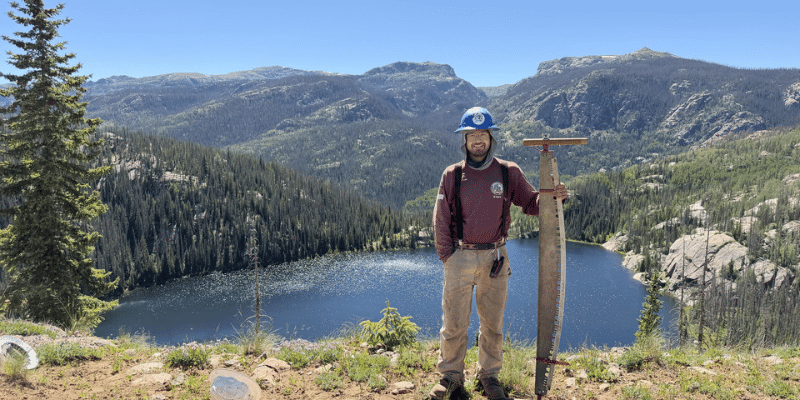
At American Conservation Experience (ACE), young adults serve on projects ranging from trail construction and habitat restoration to invasive species management, native seed collection, wildlife monitoring, forestry, and historic preservation. Through both team-based conservation crews and individual placements with land management agencies and other partners, participants learn by doing.
Conservation Requires Skilled Hands
Maintaining public lands is an ongoing effort.
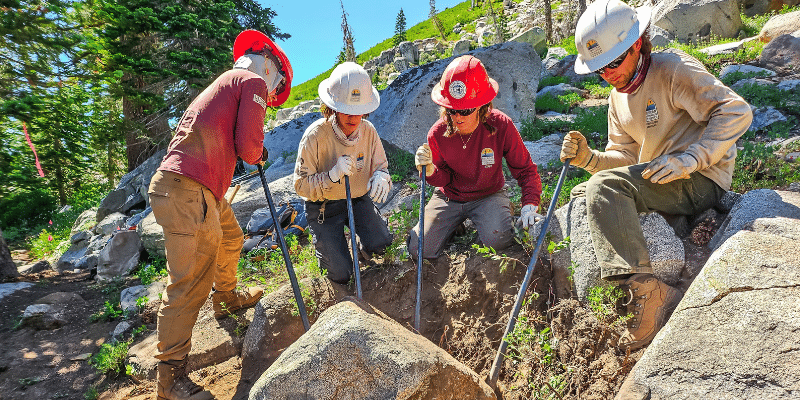
Trails need drainage repaired and vegetation cleared. Habitats can require removal of invasive plants and reestablishment of native species. Forests may need thinning or fuels reduction work. Fences, campsites, signs, and other recreation infrastructure require maintenance. Restoration projects can involve collecting native seed, planting vegetation, monitoring ecological conditions, and protecting sensitive areas.
Conservation corps help provide the field capacity to accomplish this work while giving participants direct experience with the tools, techniques, and responsibilities involved in managing natural resources.
Depending on their projects, ACE crew members may receive training or experience in areas such as trail construction, chainsaw and crosscut saw use, wilderness first aid, plant identification, invasive species management, restoration techniques, rigging, stone masonry, and other specialized skills.
These are tangible skills. But they represent only part of what participants take away from a season of conservation service.
Building Skills Beyond the Field
A conservation project rarely unfolds exactly according to plan.
Weather changes. Equipment fails. A project site may be miles from the nearest road. Crew members must live and work alongside people with different backgrounds, experiences, and perspectives. Completing the work requires communication, cooperation, adaptability, and problem-solving.
That environment creates a distinctive kind of classroom.
Participants learn how to work as part of a team, receive and apply feedback, manage responsibility, communicate with supervisors and partners, and persevere through difficult assignments. As members gain experience, they can also develop leadership skills and the confidence to take on increasingly complex responsibilities.
These abilities are valuable in conservation careers, but they are equally applicable far beyond public lands.
Expanding the Idea of a Conservation Career
Hands-on field work is one pathway into conservation, but caring for public lands requires a remarkably broad range of professions.
Today’s conservation workforce includes biologists, archaeologists, recreation specialists, GIS professionals, educators, communications professionals, maintenance specialists, planners, forestry technicians, resource managers, and many others.
ACE’s Emerging Professionals in Conservation (EPIC) program provides another route into this workforce by placing participants alongside agency and organizational mentors in specialized roles. Assignments can involve wildlife and fisheries, GIS and mapping, cultural resources, environmental education, habitat restoration, visitor services, and other fields.
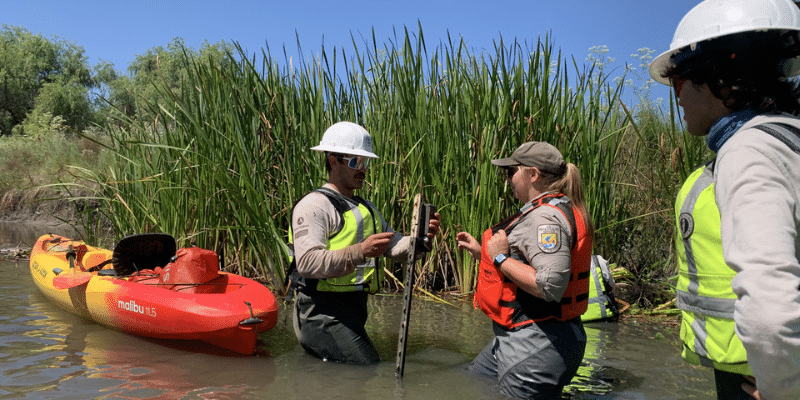
For someone beginning a career, that exposure can make an enormous difference. Instead of simply reading about a profession, participants experience how the work happens, learn from professionals already in the field, and begin building a network and a foundation of practical experience.
Two Lasting Outcomes
The value of conservation service can ultimately be seen in two places.
It is visible on the landscape - in a restored habitat, a maintained trail, a healthier forest, or a recreation area that people can continue to enjoy.
It is also visible in the people who complete the work.
They leave with new skills, greater confidence, experience working with others, and a clearer understanding of the many careers connected to conservation and public lands.
That is one of the enduring strengths of the conservation corps model: every project is an investment in both places and people.
The trail may be the most visible result. The skills carried forward by the people who built it can last much longer. ACE is very proud to play a role in this endeavor as we treasure our outdoor spaces the incredible people caring for them.