A Reflection Piece by ACE Crew Alumni Alex Tran
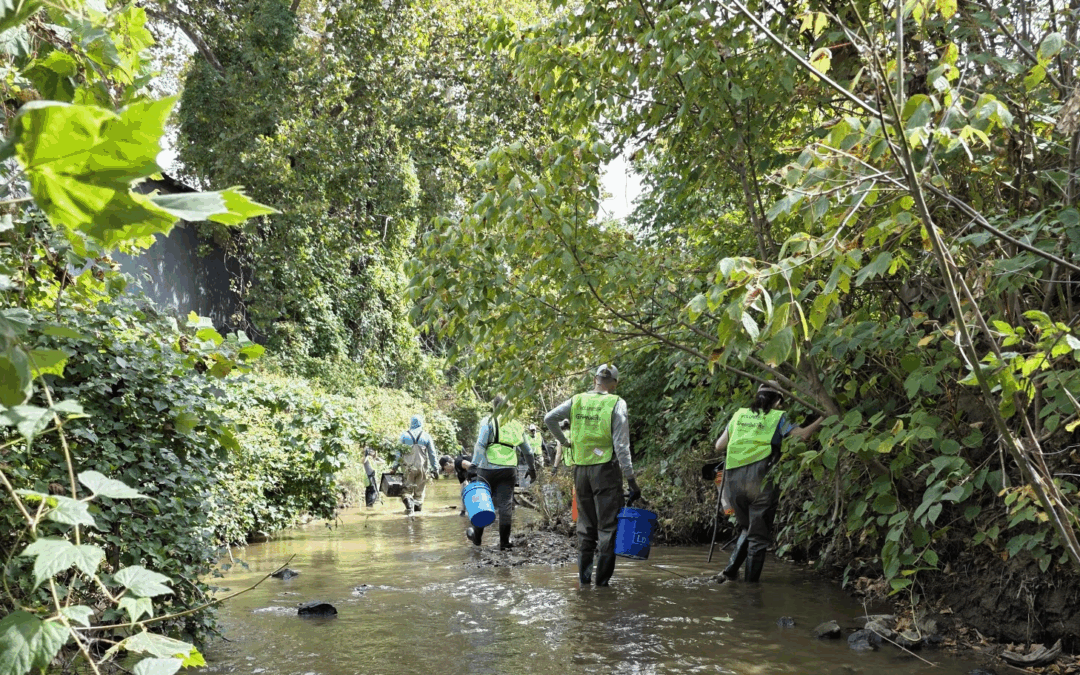
(Above Photo Credit: Nicole Smith – The Volunteer Group in the Swannanoa River, Oct 2025)
Prelude
The road to recovery from a natural disaster is long. Still, the kindness and empathy of strangers make it go more quickly. My name is Alex Tran, an alum of ACE’s Eastern Crew. It has been about one year since I finished my time with ACE, which began as a three-month stint at the start of 2024 and turned into a full year. As I returned home around this time last year, I took a moment to reflect on the skills and connections I had made during my “first year” in conservation. One part of conservation that I did not expect was surviving a natural disaster.
As many of you are aware, Hurricane Helene ravaged much of the Southern United States in the Fall of 2024, causing massive amounts of damage along its path. The storm especially hit hard in Western North Carolina, where ACE’s Eastern Branch is based. Luckily, thanks to the staff of ACE Eastern and the resilience of the members, everyone survived, including me. It has been at least a year since the hurricane, and many groups, including ACE, have contributed (and are on the path to making the region whole again). I keep myself engaged in the service world, and I stumbled upon the perfect opportunity to give back.
Since ACE is part of National Service-affiliated networks such as the Service Year Alliance (SYA), it highlighted that a group of AmeriCorps NCCC alumni wanted to do a weekend service trip in Asheville as a parallel of their recovery efforts of the 20th anniversary of Hurricane Katrina. The group’s mission was to bring together national service alums, local volunteers, and their families to continue the spirit of restoration and community connection. The ad hoc mission of this group appealed to me, so I returned to Appalachia for this two-day mission. Everyone seemed to know each other, except me, but they welcomed me with open arms. My experience of ACE and their corps experience drew parallels, which allowed me to establish some common ground.
Day 1: Cleaning up the Swannanoa River
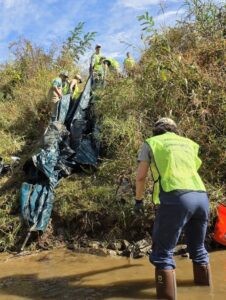
(Photo Credit: Nicole Smith – The Volunteer Group in the Swannanoa River Oct 2025)
The Swannanoa River, a major tributary of the French Broad River in Western North Carolina, was flooded with tons of debris from Hurricane Helene after it reached a record height of over 26 feet, more than 10 feet above the central flood stage.
The anniversary group partnered with Asheville GreenWorks, a nonprofit led by community leaders that helps inform and engage locals about the importance of a more resilient environment. A good portion of the team got into their issued waders and started walking into the Swannanoa.
Throughout the morning and afternoon, the group found waste dating back to the hurricane (and earlier). The items include dead vegetation, trash, and other debris that could have a long-term negative impact of water pollution.
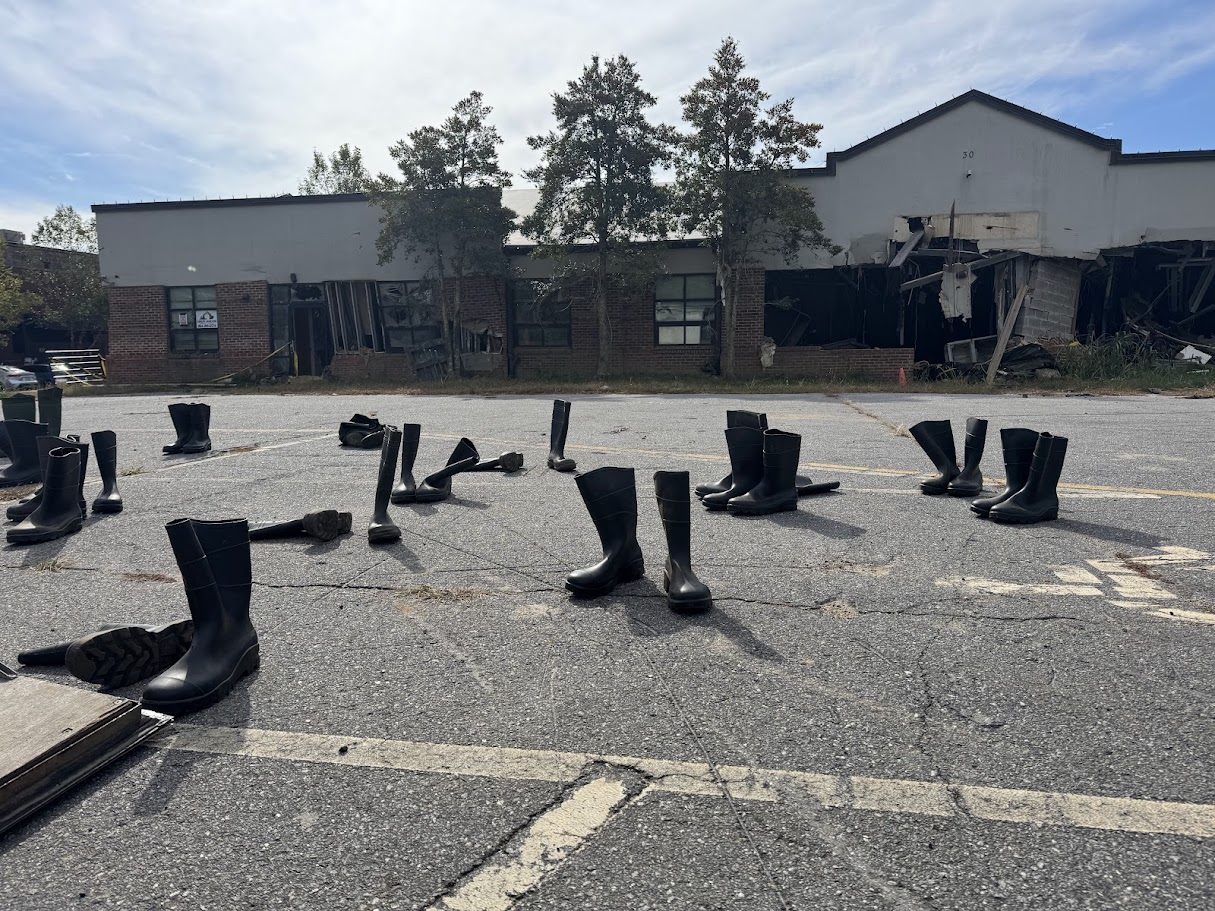
(Pictures of waddler Photo Credit – Sandra Dowd)
A handful of the Anniversary Alums brought their children, and seeing the younger generation get involved in the river cleanup really stood out. Their participation reminded me how important it is to instill environmental stewardship early. It also reminded me of my time before and after ACE. I would not say I never cared about public lands; I would describe myself as a passive supporter at best, and now a staunch ally for the environment.
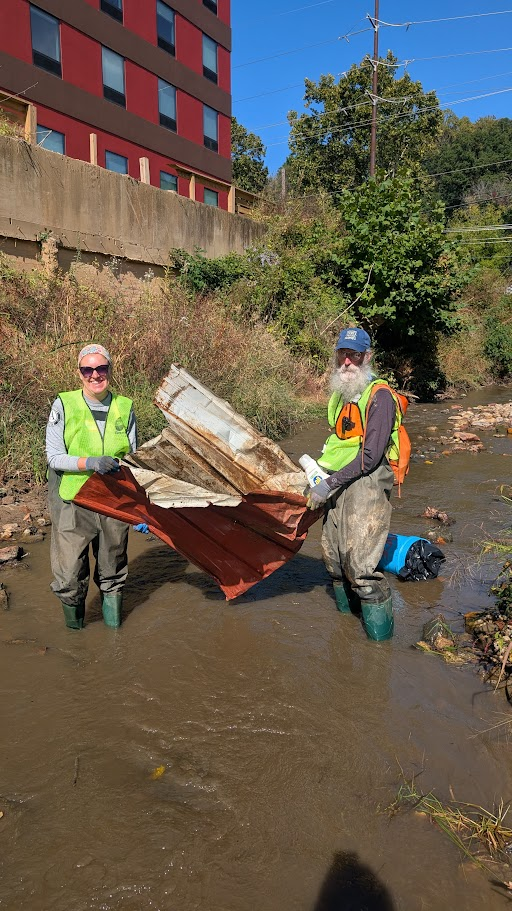
(Volunteers helping Asheville Greenworks Staff in the Swannanoa River
Photo Credit – Trevor Brightman)
Day 2: Native Tree Distribution
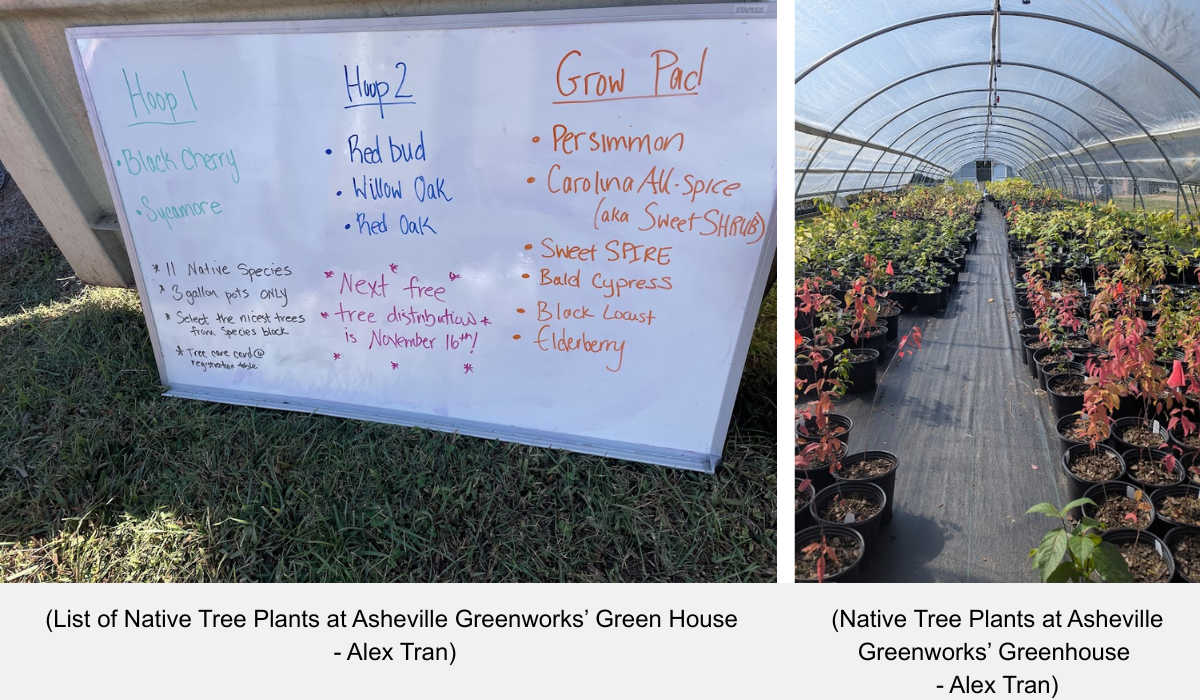
During Helene, many of Asheville’s trees fell, leaving debris to clear on roads and people’s homes. When a tree gets too large, it can be dangerous, but it is good to remind myself and others of the value of trees in the local ecosystem. Asheville GreenWorks again asked us to help with one of their native tree distribution drives as a way not only rebuild the natural beauty of Western North Carolina but also to increase biodiversity.
One of the main things that surprised me was the number of species, ranging from Black Cherries to Red Buds to Elderberries. Luckily, again, through my time in ACE, I learned some of the methods of plant identification, which made it easier to give patrons the plants they desired. Many members of the community would make impromptu mentions of how Helene affected their homes, and they would express that planting a native tree is a symbol of resilience.
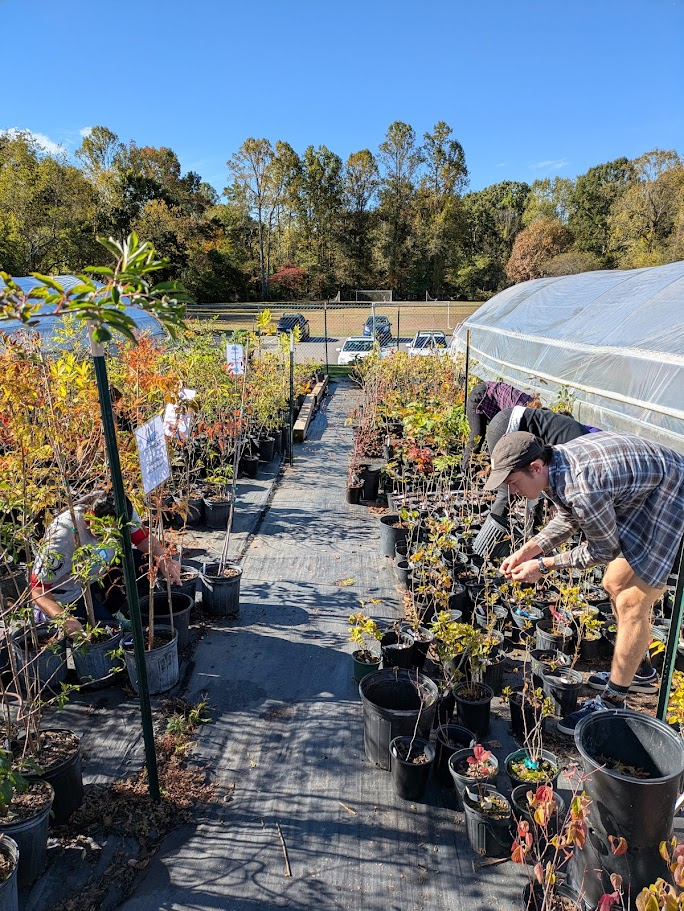
(Volunteer picking native plants – Alex Tran)
Reflections & Call to Action
As the service trip came to a close, the group organizers expressed gratitude for the bond that had endured for twenty years since their original service term (2005). She mentioned people from Maine to Missouri, Pennsylvania, and elsewhere who drove or flew to assist. Lastly, she highlighted volunteers like me who came when asked. An old project manager said to me, “When people need help, we help people.” It is a short but powerful quote I like to believe factored into my decision to take this trip. When the cameras are not there, the work must continue, and sometimes the story of unsung heroes needs to be sung.
As the holidays are upon us and the New Year approaches, it is essential to highlight organizations that continue to do good work in support of the Helene recovery efforts and the environment. Asheville Greenworks is one of those organizations. Check them out and donate to their sustainable efforts.
Lastly, the spirit of those NCCC alums echoes the ethos of ACE, and it reminds me that regardless of where you serve, you can do good. I thank Service Year Alliance for amplifying that opportunity. SYA provides opportunities for those who want to serve and for National Service alumni to volunteer their servant hearts.One year out, the experiences I had at ACE are something I will carry with me for the rest of my life. Happy Holidays
-AT
In ACE Crew matches, the organization teaches members the value of hard work, engages future generations of Americans in environmental stewardship, and, finally, shows them that the needs of the environment grow day by day. It takes a village, and the Earth is our village.
People need to understand the power of volunteerism and how one person can make a difference.