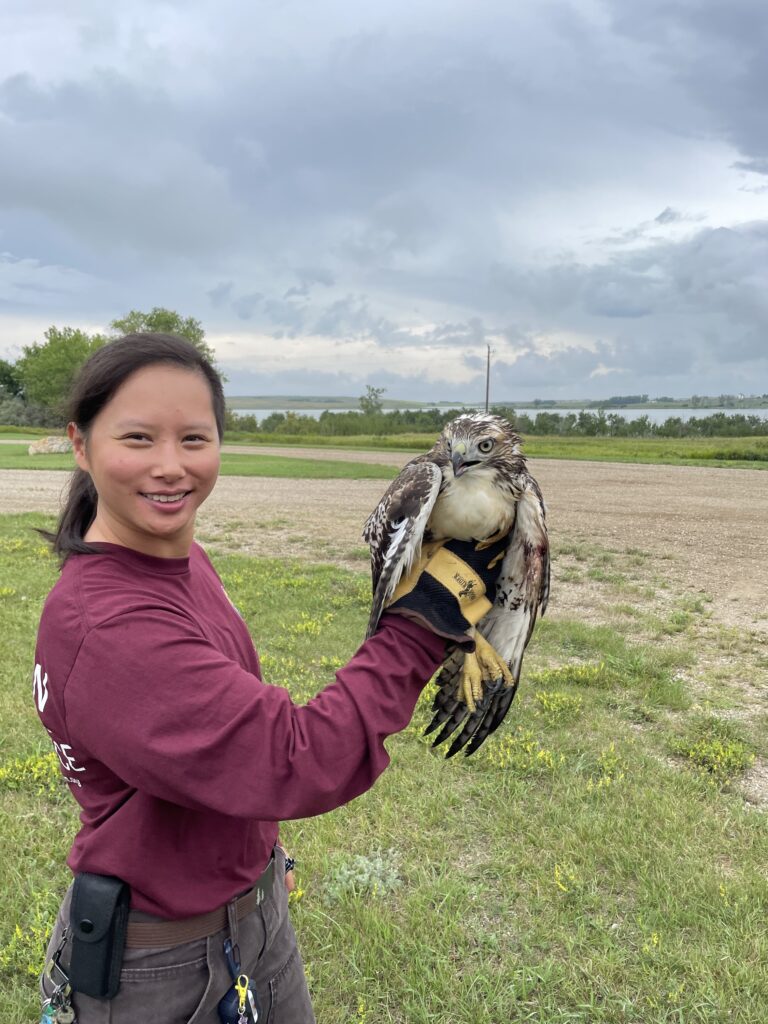
ACE member Allison, who served in an individual placement/internship position with the US Fish and Wildlife Service, shares her journey as a wildlife refuge support member.
Allison participated in ACE’s EPIC (Emerging Professionals In Conservation) program that features hands-on opportunities to work under the guidance of land management mentors enabling them to apply their resource management knowledge and build real-world experience.
What did you enjoy about serving as a wildlife refuge support member at Lostwood National Wildlife Refuge? What are examples of your responsibilities?
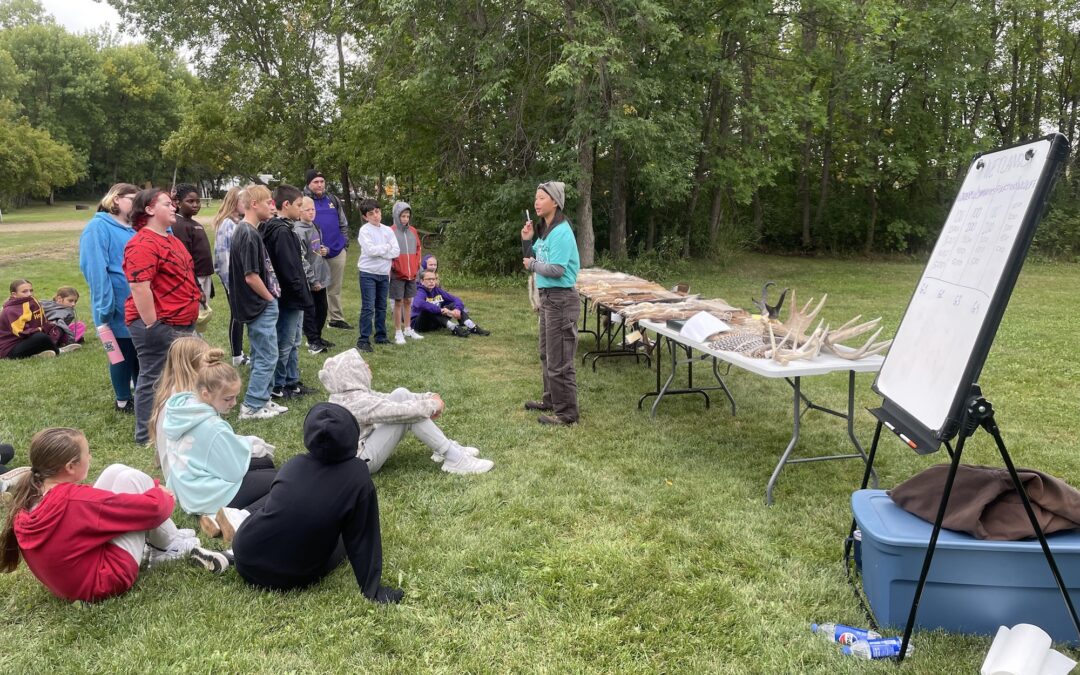
I really enjoyed working outside and learning a wide variety of skills to help further my capabilities in the field. When it wasn’t a thunder and lightning storm or hailing, I was outside in the field. I was mainly tasked with spraying herbicide on various invasive species including, but not limited to, leafy spurge, yellow toadflax, common tansy, absinth wormwood, and Canada thistle. I was taught how to operate a commercial UTV with a boomless nozzle spray tank and drove around various sections of the refuge as well as adjacent Waterfowl Production Areas (WPA’s) targeting invasive species with either Freelexx or Milestone. Other tasks included various maintenance duties such as carpentry and painting work around the office and kiosks, as well as general lawncare including mowing and weed whacking. I was the jack of all trades and helped in other various projects including four-square mile surveys, goose banding, biological control (i.e., releasing yellow toadflax weevils), and working at local kids’ events.
What did you learn during your term?
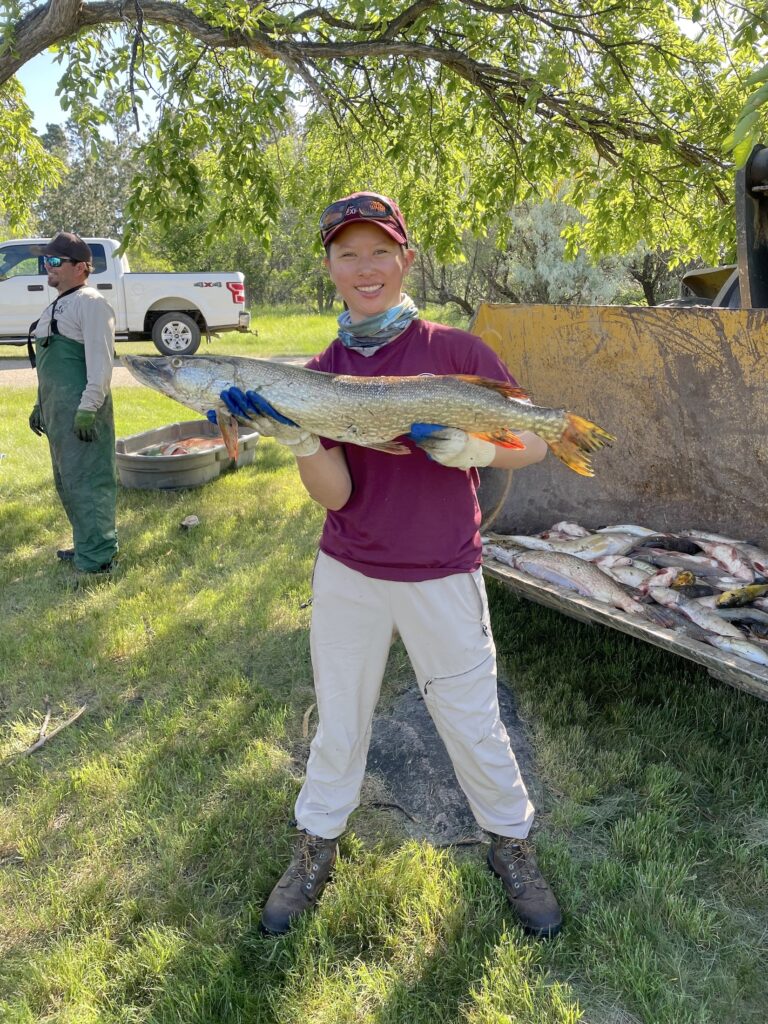
Having predominantly worked on the east coast my whole life, I learned a lot of new skills and experiences while working at Lostwood. I learned how to operate a UTV containing a pesticide spray tank with a boomless spray nozzle as well as how to properly apply herbicide to invasive species. I received several certifications: my ORUV safety certificate for operating UTVs and ATVs, a ND commercial pesticide applicator’s license, and the S-130/S-190 Intro to Wildland Firefighting certificate. In addition, I learned how to repair and set up electric fencing and round up cattle.
What advice would you share with others considering conservation volunteer service or a conservation career?
For those considering conservation volunteer efforts or a career, I would suggest making connections with people and having a strong work ethic. Being flexible is also an excellent trait to have, and being willing to go where the work is makes you far more valuable as a technician starting out in the field.
Any other thoughts you’d like to share?
It has been an absolute pleasure working with ACE, and I hold them and everyone I worked with in high regards. Hopefully I can work with ACE again in the future!