

ACE’s Journey of Resilience in Post-Helene Asheville
In the fall of 2024, the landscape of Western North Carolina was forever altered. Hurricane Helene tore through the Blue Ridge Mountains, dropping a staggering 30 inches of rain and unleashing 140 mph winds. For the residents of Asheville and the surrounding communities, the statistics—73,000 homes damaged and nearly 200,000 acres of National Forest land impacted—were more than just numbers; they were a sudden, harrowing reality.
At American Conservation Experience (ACE), our Asheville hub sits at the heart of this community. When the storm hit, the disaster wasn't just professional—it was personal. Nearly twenty of our local staff members faced significant personal losses, with several displaced from their own homes. Yet, in a powerful testament to the spirit of service, these individuals stepped forward to help turning their own grief into a catalyst for community rebuilding.
Our work started in 2024 but continuted well into 2025.
Long-Term Recovery
While first responders handle the immediate life-saving minutes after a disaster, ACE bridges the critical gap between emergency chaos and long-term recovery. Our mission quickly evolved from traditional conservation work to a multi-faceted humanitarian and ecological relief operation.
Our 38 members and dedicated staff hit the ground running with a diverse set of missions:
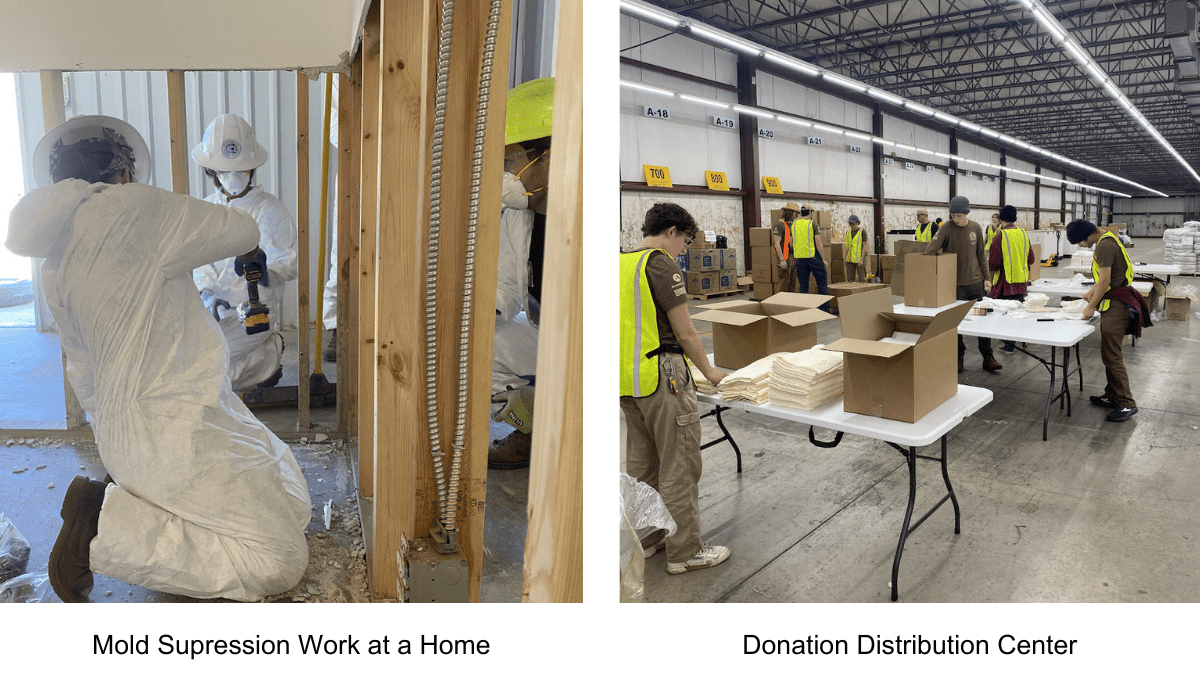
- Muck and Gut Operations: Entering flooded homes and community buildings to remove waterlogged debris and treat for mold, saving structures from permanent degradation.
- Logistical Lifelines: Establishing and managing a regional donation distribution center to ensure food, water, and supplies reached those in need.
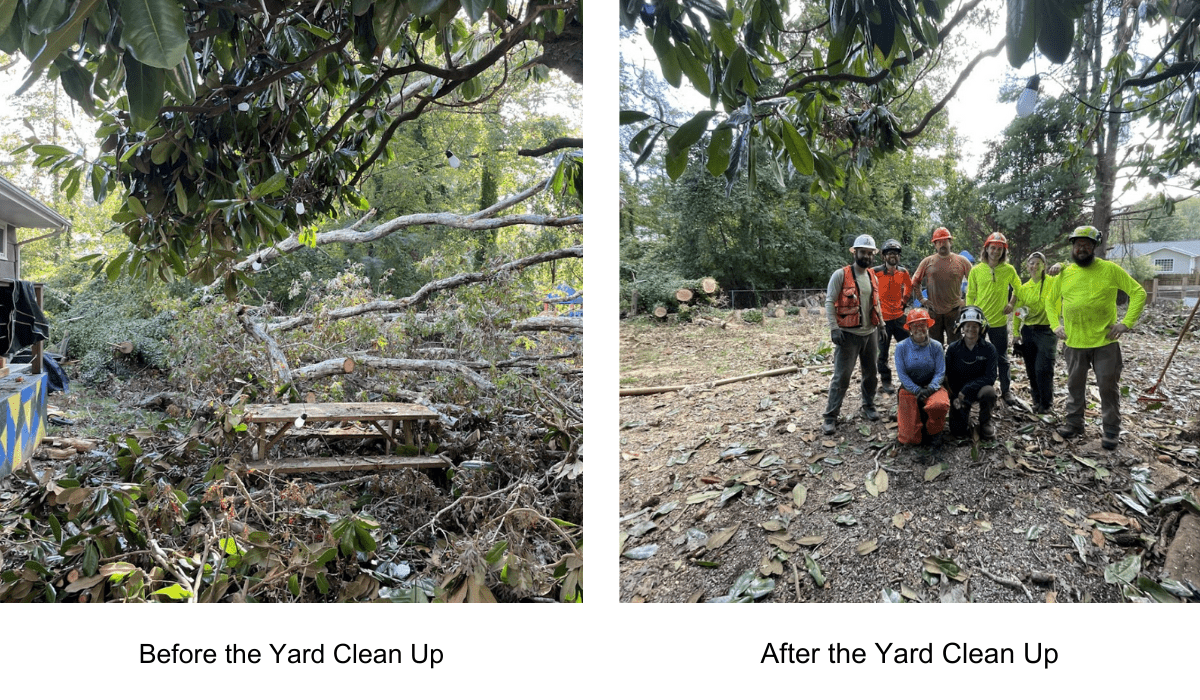
- Clearing the Way: Deploying expert saw crews to reopen roads and driveways, restoring access for emergency vehicles and residents.
Collaboration Was Critical
One of the most inspiring chapters of this recovery was the "Community Saw Crew" initiative. Recognizing that the sheer volume of downed timber was more than any one agency could handle, ACE organized a coalition of experts. We brought together staff from the US Forest Service, the National Park Service (Great Smoky Mountains), and local partners like EcoForesters.
This wasn't just about clearing wood; it was about restoration and education. Our National Saw Coordinator hosted chainsaw safety courses for the Oakley community, empowering neighbors to safely manage their own properties. For many homeowners, the impact was emotional. As one Raleigh Road resident shared, every time their child saw the fallen tree in their yard, it served as a traumatic reminder of the storm. Seeing it cleared brought a sense of peace and comfort that a statistics sheet could never capture.
Turning Service into a Career Path
For the AmeriCorps members involved, the response to Hurricane Helene has been a profound, life-changing classroom. These members didn't just volunteer; they became specialists. Before deploying, they underwent rigorous training in:
- Disaster Mental Health & First Aid
- FEMA 100 & 700 Certifications
- Muck & Gut/Mold Suppression
- Hazardous Tree Consultation
Take Alex Tran, for example. Alex’s experience with ACE’s disaster response work in North Carolina inspired a career shift. Today, he serves as a FEMA reservist, recently speaking on a panel for the Service Year Alliance to highlight how national service builds the disaster-ready workforce of the future. Read Alex’s blog on his disaster recovery work in NC
From Recovery to Restoration
In the year following Helene, ACE’s role has naturally shifted from emergency relief to ecological stewardship. The storm ruined ecosystems, resulted in the expansion of invasive species, and eroded slopes threaten the water quality of local rivers.
ACE crews deployed to the Pisgah National Forest, where they repaired miles of damaged trails, stabilized riparian corridors, and rebuilt the infrastructure that allows the public to connect with nature. This transition—from "mucking out" a basement to "re-planting" a forest—demonstrates the unique bridge ACE provides between human resilience and environmental health.
Looking Ahead
The work in Asheville is far from over, but the model we’ve built here is a blueprint for the future. By blending humanitarian aid with conservation expertise, ACE is proving that we can restore both our communities and our wild places simultaneously.
We are incredibly proud of our members and staff who turned a moment of crisis into a movement of collaboration. Together, we aren't just cleaning up after a storm; we are building a more resilient North Carolina.