
How low-tech restoration techniques are helping retain water, reduce erosion, and restore vital wet meadow ecosystems in Sublette County.
Sometimes, restoring a landscape doesn't require heavy machinery or complex engineering. Instead, carefully placed rocks, branches, and other natural materials can help water do much of the work.
In Sublette County, Wyoming, near the town of Pinedale, American Conservation Experience (ACE) crews put this approach into practice. In partnership with the Sublette County Conservation District, ACE participants worked to restore wet meadow ecosystems using low-tech, process-based restoration techniques designed to improve water retention, reduce erosion, and support healthier landscapes.
The project demonstrates how relatively simple conservation techniques, combined with dedicated crews and hands-on training, can help address complex environmental challenges.
Why Wet Meadows Matter
Wet meadows are important ecosystems that support wildlife, native vegetation, and the health of surrounding watersheds. These areas naturally collect and retain moisture, providing essential habitat and helping sustain plant growth during dry periods.
However, wet meadows can become degraded when erosion alters how water moves across the landscape. Livestock activity, vehicle traffic, culverts, and other disturbances can contribute to channel erosion, allowing water to flow rapidly away rather than spreading across the meadow and soaking into the soil.
Over time, this can lower the local water table, reduce vegetation, and diminish the landscape's ability to support wildlife and withstand drought.
Restoring these natural processes is essential to bringing these ecosystems back to life.
Letting Nature Do the Work
Rather than relying on extensive excavation or large-scale infrastructure, low-tech, process-based restoration (LTPBR) focuses on working with natural systems.
The approach uses strategically placed structures made from materials such as rocks, logs, and branches to slow water movement, capture sediment, and encourage water to spread across the landscape.
Among the techniques ACE crews commonly use include:
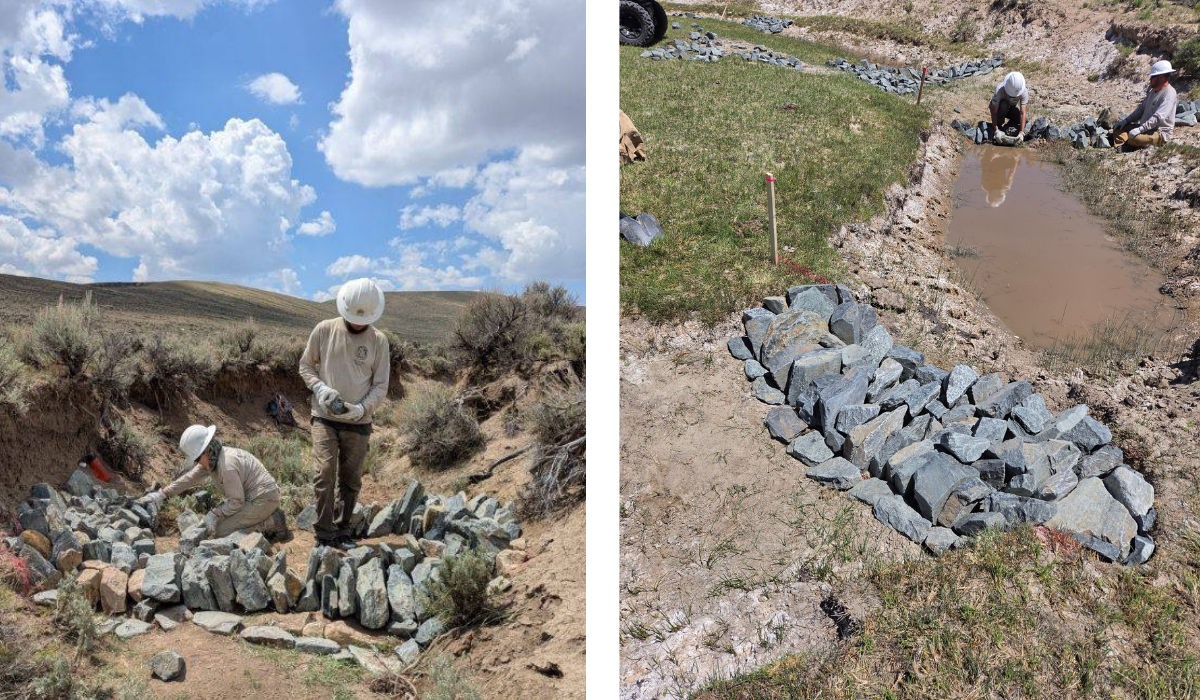
- One-rock dams: Small rock structures that slow water flow, capture sediment, and help stabilize eroding channels.
- Zuni bowls: Rock-lined structures designed to protect areas where flowing water has created concentrated erosion.
- Beaver dam analogues (BDAs): Human-built structures that mimic some of the functions of natural beaver dams, slowing water and encouraging moisture retention.
- Zeedyk structures: A family of low-tech rock treatments designed to address erosion and help restore natural water movement across degraded landscapes.
These methods encourage water to remain on the landscape longer, supporting soil moisture, vegetation recovery, and healthier riparian habitats.
Research on low-tech restoration has demonstrated promising benefits, including improved vegetation productivity and longer periods of green plant growth. These improvements can help landscapes better withstand drought and changing environmental conditions.
ACE Crews Making a Difference in Sublette County
For ACE participants, the Sublette County project offered an opportunity to contribute directly to landscape restoration while developing practical conservation skills.
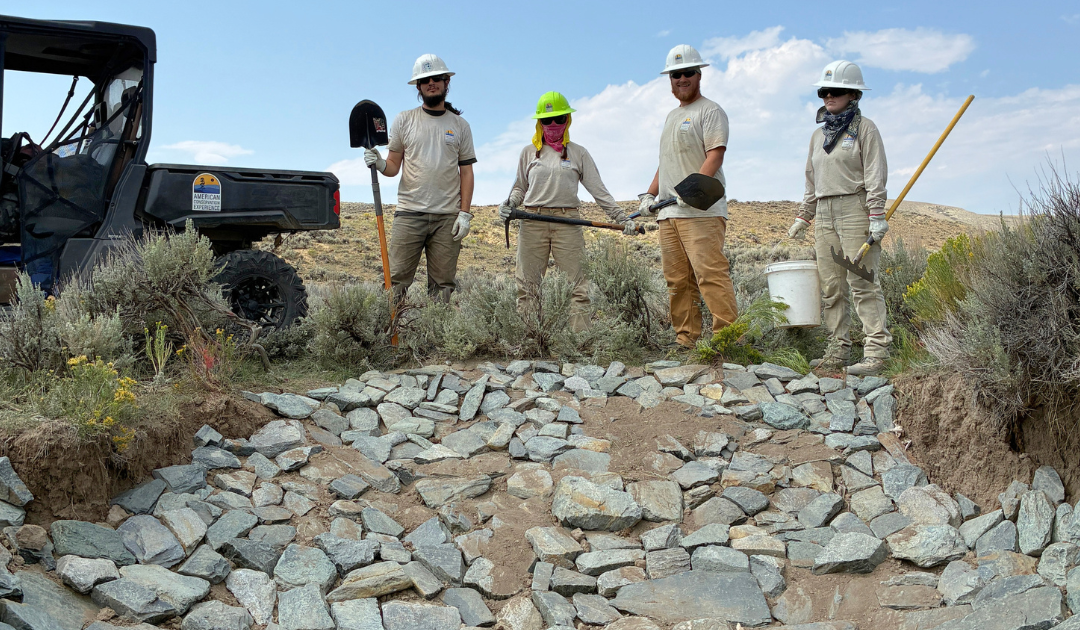
Over a 14-week service opportunity, crew members focused on constructing low-tech restoration features, including beaver dam analogues, one-rock dams, and Zuni bowls.
Working outdoors in Wyoming's expansive rangelands, participants gained hands-on experience in erosion control, water management, restoration techniques, and teamwork.
Each structure represents a small but meaningful intervention in the landscape. Collectively, these features are intended to help slow runoff, retain sediment, support vegetation recovery, and create conditions that allow wet meadow ecosystems to recover over time.
The work also illustrates the value of conservation corps partnerships. By providing trained crews to implement labor-intensive restoration techniques, ACE helps land management partners advance important conservation priorities while giving young adults opportunities to build technical and professional skills.
Building Resilient Landscapes and Future Stewards
The benefits of wet meadow restoration extend well beyond individual project sites. Healthier wet meadows can support biodiversity, improve watershed function, and help retain moisture during periods of limited precipitation.
While ecological recovery takes time, the structures installed by ACE crews create opportunities for natural processes to gradually reshape and restore degraded areas.
Equally important is the experience gained by the people completing the work. Through projects like this, ACE participants learn how practical, science-informed conservation techniques can produce meaningful results without relying on large-scale construction.
ACE was excited to support Sublette County’s efforts and appreciates the dedicated crew members whose hard work the helped contribute to the foundation for healthier wet meadows in Wyoming.
Sometimes, meaningful restoration begins with something as simple as slowing the water and letting nature take the lead.