Public lands face an ongoing challenge: keeping miles of backcountry infrastructure safe and sustainable against decades of heavy foot traffic and harsh weather. From crumbling historic stone retainers to heavily eroded trail networks, maintaining our national parks requires constant effort, deep trade knowledge, and physical endurance.
The on-the-ground work requires planning along with building a collaborative talent pipeline. By bringing seasoned professionals together with young people eager to learn the trade, conservation teams can restore critical trails today while equipping the next generation of land stewards with the skills to protect our parks tomorrow.
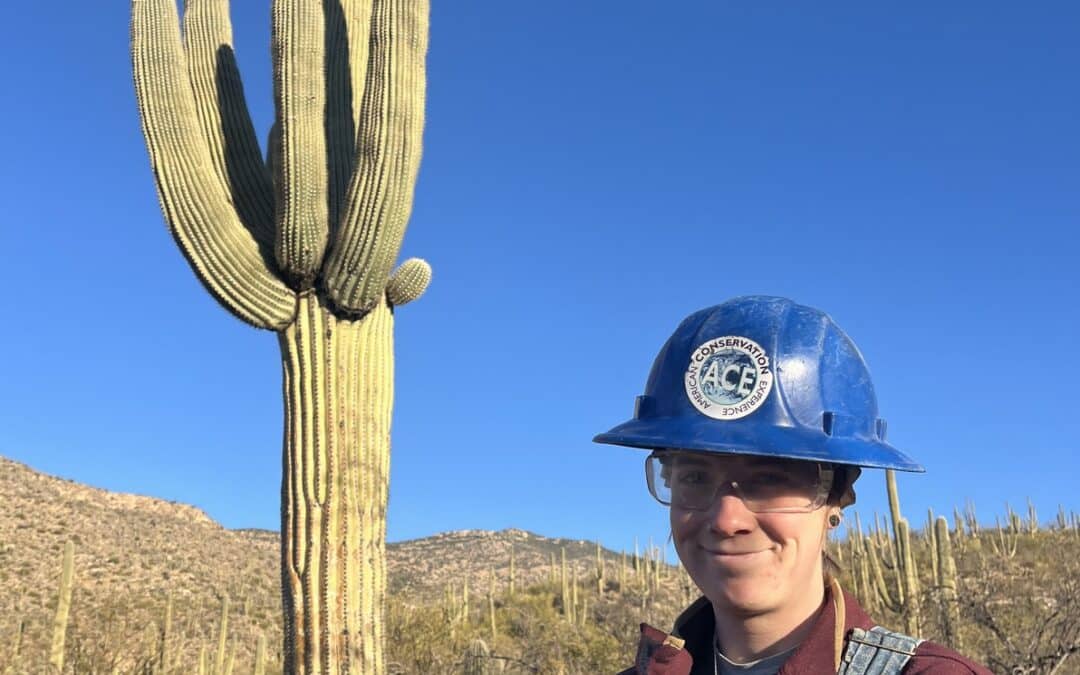
A recent project at Saguaro National Park in southern Arizona highlights how an effective collaboration model gets the job done while advancing the skills of young crew members.
Using Great American Outdoors Act (GAOA) funding, Saguaro National Park recently completed a comprehensive restoration of the Manning Camp Trail. Located in the park’s rugged Rincon Mountain District, this trail serves as a vital artery for wilderness hikers, equestrian riders, park management staff, and the park’s essential mule pack string. In 2012, it was officially incorporated into the 800-mile Arizona National Scenic Trail.
Over decades of intense monsoon seasons and desert heat, critical sections of the trail had severely eroded, threatening visitor safety, damaging surrounding vegetation, and complicating wilderness packing operations.
To tackle the restoration, the National Park Service deployed a Maintenance Action Team (MAT) model that utilizes a team that is skilled in a variety of trades including historic restoration and preservation work, carpentry, trail maintenance, and more.
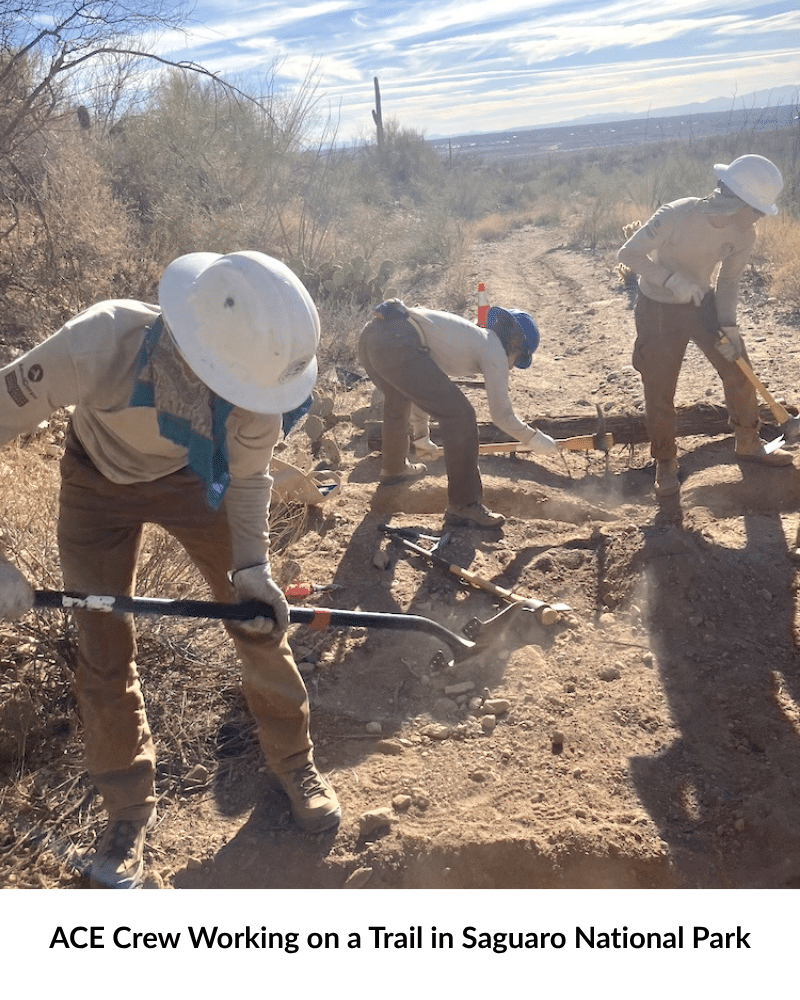
For the Manning Camp Trail project, seasoned NPS trail crew leaders worked directly with an ACE crew to complete a variety of essential tasks in demanding backcountry conditions to:
- Rebuild stone foundations and stabilization features along steep slopes.
- Clear, grade, and redesign drainage channels to divert destructive runoff.
- Resurface trail tread to reduce widening and soil loss.
- Remove hazardous blowdowns and overgrown desert scrub.
The collaboration created a more sustainable Manning Camp Trail that will resist erosion and support park operations for years to come. But the long-term impact is even more significant.
When experienced trade professionals work alongside young conservation corps members, two essential objectives are achieved:
- Project Execution: The park receives high-quality, professional craftsmanship using traditional techniques tailored for wilderness preservation.
- Workforce Pipeline Development: A new generation of land stewards learns the nuances of trail engineering on the job. They learn how to read water flow across a slope, handle heavy rigging safely, and master the mechanics of traditional tools like rock bars and crosscut saws.
Through this model, the pool of skilled trade workers available to public land agencies grows larger.
From the CCC to Today
There is a deep historical resonance to the work completed on the Manning Camp Trail. The route was originally constructed in the 1930s through a cooperative effort involving the city of Tucson, the University of Arizona, and field crews from the Civilian Conservation Corps (CCC).
Nearly a century ago, the CCC was established on a simple premise: give young people meaningful work maintaining public lands, and both the individuals and the lands will benefit.
Ninety years later, the tools and circumstances have evolved, but the core formula remains unchanged. Investing in public land infrastructure requires investing in the people who do the work. By combining federal funding like GAOA with hands-on crew mentorship through programs like ACE, we aren't just clearing deferred maintenance, but we are ensuring that the skills needed to protect America's public lands endure for generations to come.