At Ocmulgee Mounds National Historical Park, the land tells a story that spans over 12,000 years. From the Paleo-Indian hunters of the Ice Age to the Mississippian culture that constructed the massive earthen mounds still standing today, this landscape is a profound testament to continuous human habitation. However, preserving such a significant site requires more than just protecting the monuments; it requires active stewardship of the ecosystem that surrounds them.
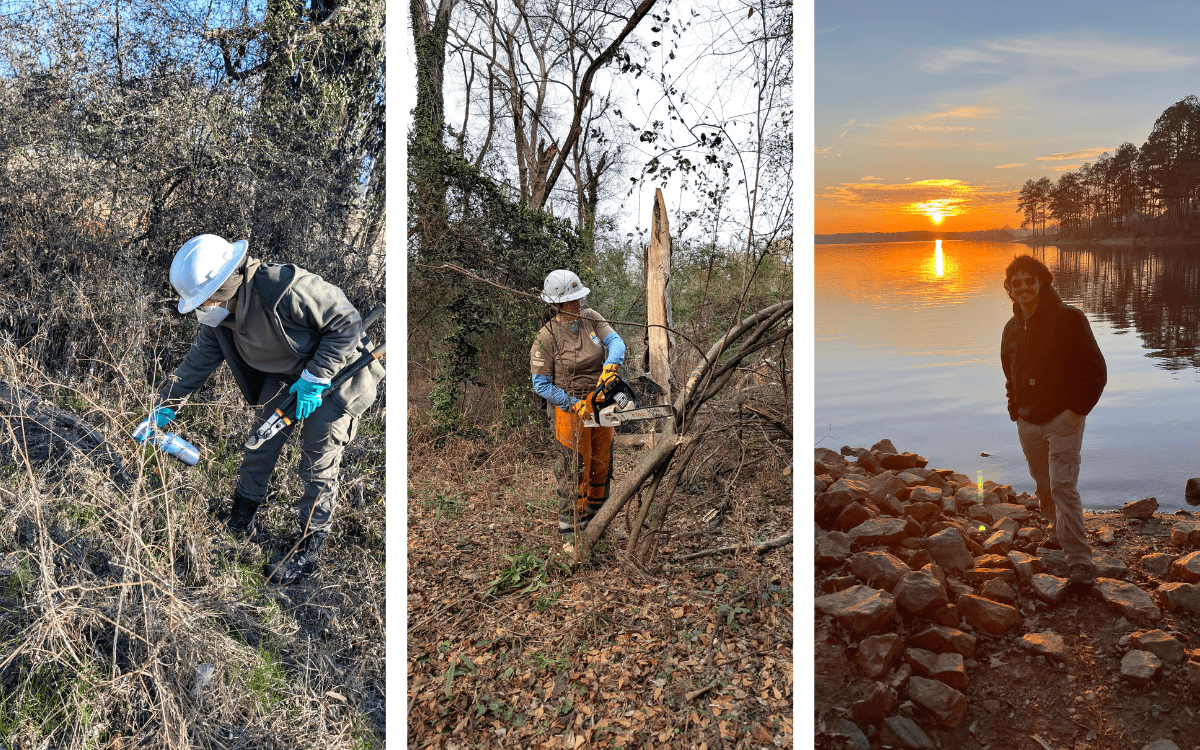
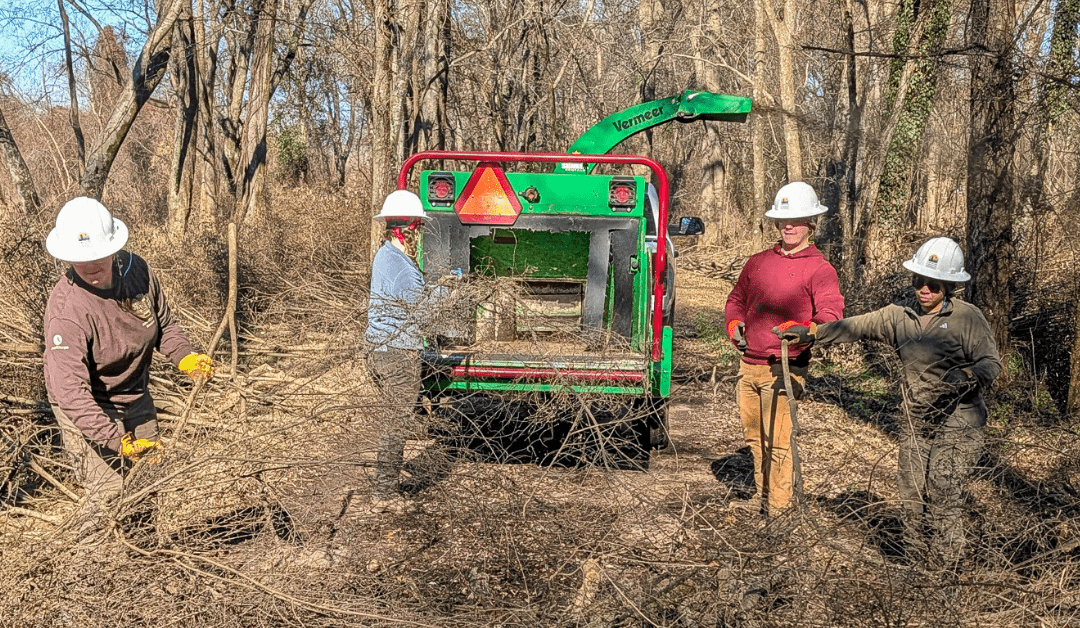
Recently, an American Conservation Experience (ACE) crew took to the field to do just that. Through a partnership with the National Park Service (NPS), our crew dedicated their efforts to invasive species management along the Heritage Trail corridor, a vital artery through the park’s historical and natural landscape. Throughout this project, NPS staff have been invaluable partners, generously taking the time to share the deep history and cultural significance of the site with our crew members, providing them with a profound connection to the land they were working to protect.
The Battle for the Riverbank
The primary focus of this project was the removal of aggressive, non-native plant species that have begun to choke out the local environment. While these invasive plants may look like simple greenery to the untrained eye, they pose a significant threat to the park’s ecological integrity and historical accuracy.
By systematically removing and treating these plants, the ACE crew is making room for a legendary local: River Cane (Arundinaria gigantea).
River cane is far more than just a plant in this region; it is a culturally significant species for many Native American tribes, historically used for everything from basketry and arrows to housing. Beyond its cultural value, river cane is an ecological powerhouse. It is exceptionally effective at bank stabilization and flood mitigation, acting as a natural buffer that protects the Ocmulgee River’s edge from erosion.
Improving the Visitor Experience
Conservation work is often about finding the balance between ecological health and human connection. By clearing the dense “wall” of invasive vegetation, the ACE crew has achieved several key goals:
- Restoring the View: For the first time in years, trail users along the Heritage Trail can enjoy unobstructed views of the Ocmulgee River, reconnecting the modern path with the water source that sustained cultures for millennia.
- Safety and Accessibility: Dense overgrowth can hide trail hazards and make maintenance difficult. The crew’s work has improved visibility and safety for both park visitors and NPS staff.
- Habitat Restoration: As the invasive species recede, the native river cane has the sunlight and soil nutrients it needs to flourish, creating a healthier habitat for local wildlife.
A Legacy of Stewardship
This project is a perfect example of how hands-on conservation supports the long-term stewardship of our public lands. By placing a youth crew in the heart of this prehistoric site, we aren’t just fixing a trail; we are engaging the next generation of conservationists in the protection of America’s cultural heritage.
We want to extend huge thanks to our hardworking Eastern conservation crew. Their sweat and dedication have ensured that the Heritage Trail remains a safe, beautiful, and historically authentic place for visitors to explore the deep roots of our shared history.