A Reflection by ACE EPIC BLM Member Holly Bratcher
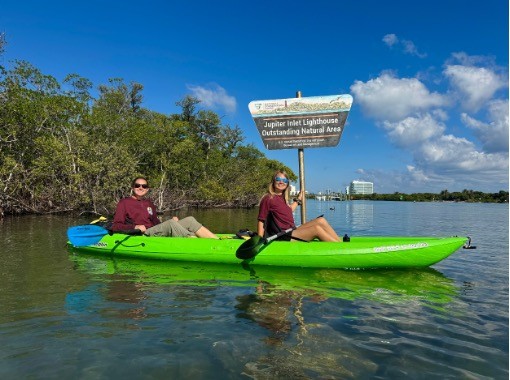
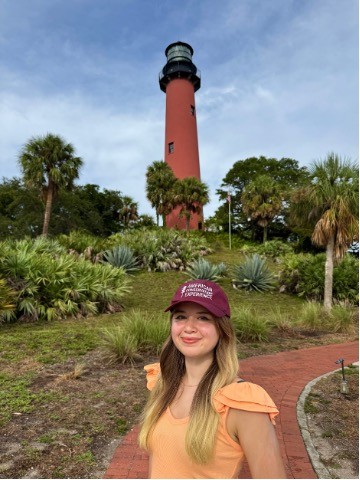
As a Park Ranger Aid with the Bureau of Land Management (BLM) in Jupiter, Florida, I have had the opportunity to work and live at one of only three Outstanding Natural Areas in the country. My name is Holly Bratcher, and I serve at Jupiter Inlet Lighthouse Outstanding Natural Area (JILONA), the only BLM National Conservation Land east of the Mississippi River focused on the preservation, protection, and enhancement of biodiversity and natural resources. Before beginning my ACE EPIC role I graduated from Berry College in Rome, Georgia with a degree in Environmental Science and minors in Biology and Geology. I have always had a deep passion for the environment and caring for the land that we all share. ACE EPIC has allowed this passion to flourish through meaningful, hands-on work that has led me to see tangible conservation impacts in real time.
Located along the coastline, our site has faced ongoing erosion issues, with an average of seven feet of shoreline lost each year and in some areas, as much as twenty feet. To address this, a $16 million shoreline stabilization project was launched along a one-mile stretch of the site. This project includes the installation of two retaining walls, wave breaks, pilings, and artificial reefs. When I arrived in August, the project was already underway, so this transformed landscape was all I had known, especially coming from Georgia. However, for many locals in the Palm Beach area, these changes represented a dramatic shift to a natural area long used by beachgoers and boaters.
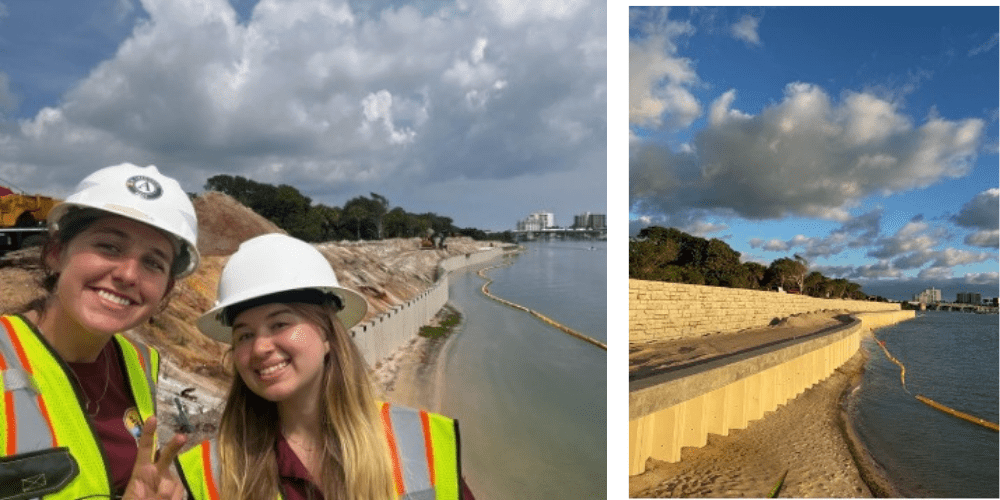
As the retaining walls have been completed, we now have the exciting opportunity to revegetate the site and re-establish the Outstanding Natural Area. Our on-site native nursery was built in May of 2025 and since my arrival in August, it has been a major focus of my ACE position. Learning plant propagation, germination, transplanting and care has honed in on my academic background in botany while deepening my understanding of Florida native species. Currently, the nursery supports a diversity of 37 native plant species, including successfully germinated cocoplum, dune sunflower, and wild coffee all from seed. Knowing that these plants will be used to restore habitats throughout the natural area makes the work especially rewarding. With an American Conservation Experience crew, we have already planted over 250 young mangroves grown in the nursery back along the shoreline. These mangroves will support a healthy shoreline by stabilizing the sediments, serving as a carbon sink and providing habitat for aquatic species.

Throughout 2026, we will continue bringing native species grown in the nursery, as well as additional purchased vegetation, to the site through public planting days, focusing on both upland and tidal vegetation. What has been most meaningful to me is how involved I have been in the shoreline stabilization project, even as an intern. Being on-site from the early stages, when the landscape was little more than dirt mounds, to now seeing a stabilized shoreline with a beautifully constructed wall and soon-to-be densely planted native vegetation has been truly heartwarming. This project has felt full-circle for me in just one year, and I can only imagine how much it will mean to the local community in the years to come. Seeing seeds I personally germinated and propagated now contributing to healthier habitats is something I will carry with me for the rest of my career.
